


On November 6, the Foton Super-Fast-Charging Strategy Launch Conference was held in Beijing. Chang Rui, CEO of BAIC Group and Chairman of the Board of BAIC FOTON, Lu Zhenghua, BAIC FOTON CEO, and other company leaders, together with industry chain partners such as CATL, SUNWODA, TELD and Hunan Jingneng New Energy Technology Co., Ltd., as well as customers and media guests, attended the event.
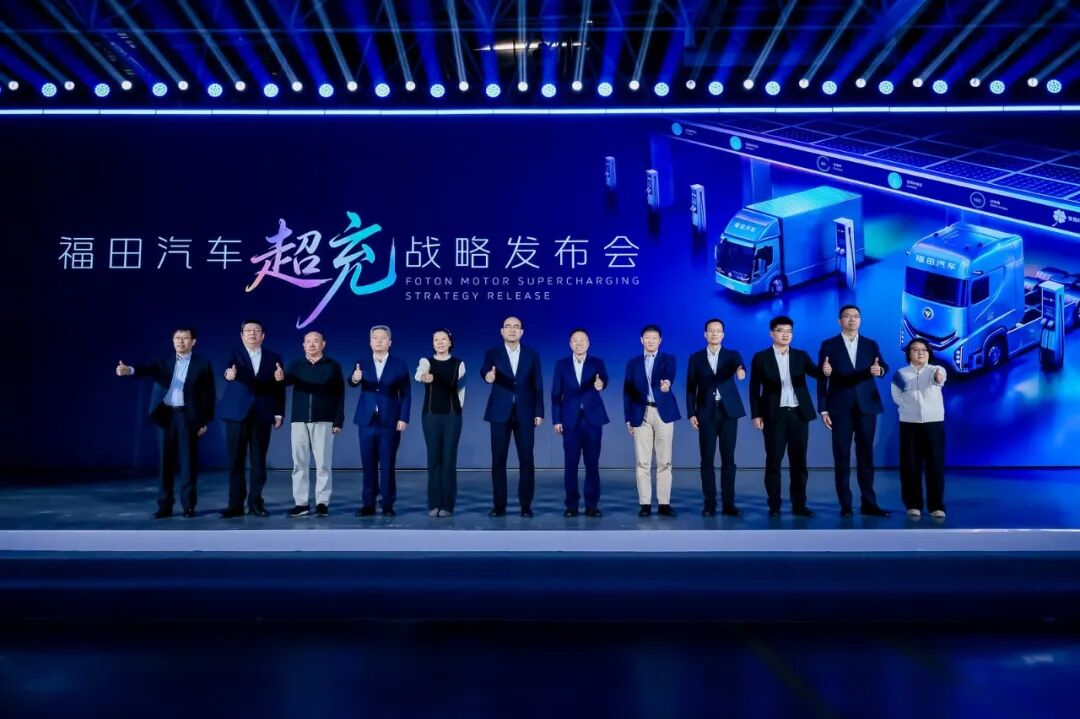
At the conference, BAIC FOTON released its full-domain super-fast-charging ecosystem strategy and simultaneously held the global debut of the Aumark Z super-fast-charging light truck and the megawatt-level super-fast-charging heavy truck. Through 'vehicle-charging pile-grid-cloud' coordination, the company is driving commercial vehicle charging from single-vehicle charging toward comprehensive energy services, opening the door to a new era of high-power charging for commercial vehicles.
Connecting Vehicle-Charging Pile-Grid-Cloud Coordination and Advancing the Upgrade of Commercial Vehicle Energy Management
The electrification of commercial vehicles places higher demands on charging efficiency, power supply and energy scheduling. Qin Zhidong, VP of BAIC FOTON, said in an in-depth interpretation of the full-domain super-fast-charging strategy that commercial vehicles are transforming into carriers of multiple values including data, energy and ecosystem, and that diversified commercial values such as station services, virtual power plant peak shaving, vehicle-battery separation and battery cascading utilization are being continuously released.
Focusing on the full chain of vehicles, charging facilities, power networks and cloud management, BAIC FOTON has built an integrated 'vehicle-charging pile-grid-cloud' architecture. Through four major platforms—connected vehicle data, charging operations, vehicle-grid energy interaction and power battery health management—it realizes unified perception of vehicle, battery and station status and energy scheduling. Relying on more than 3.5 million connected vehicles online, daily data processing capacity of 3PB and more than 770,000 linked charging terminals, the system provides data support for charging network planning and operations.
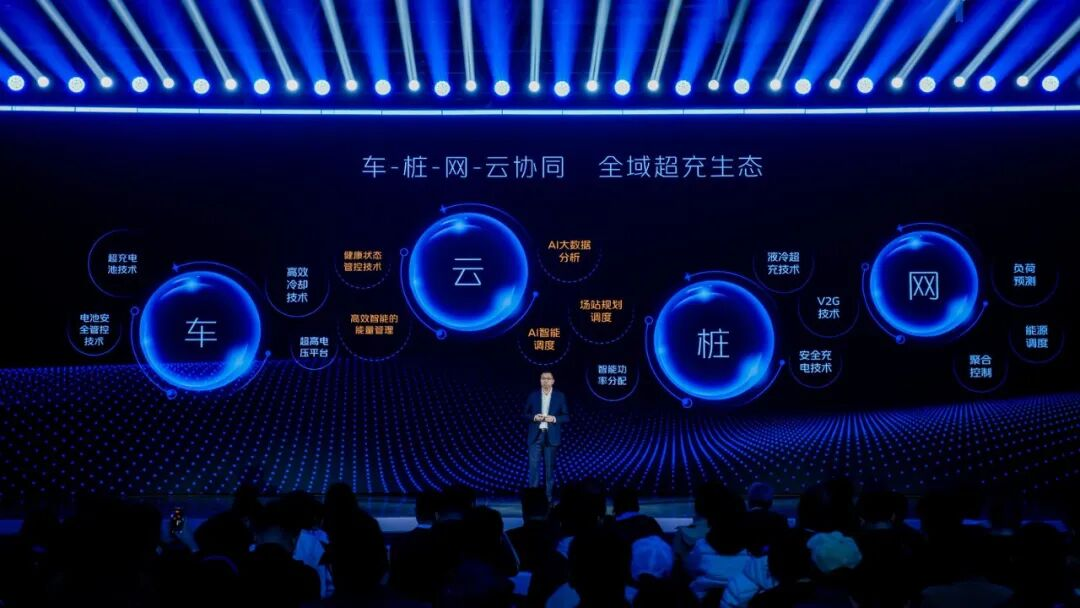
At the technical level, the vehicle adopts an 800V high-voltage architecture compatible with voltages up to 1000V, opens up a 1.5 MW charging channel, and achieves a maximum combined current of 1600A with dual guns. The supporting super-fast-charging battery supports rates of 4C and above, with charge-discharge efficiency of 95% and a cycle life of more than 6,500 cycles. The cooling system manages temperature rise under high current, ensuring the safety of high-power charging.
Meanwhile, during the training period, multiple special technical seminars were organized to provide customized maintenance solutions for complex overseas operating conditions. Trainees said that the systematic courses effectively resolved many confusions in frontline maintenance work. At the end of the training, a special technical assessment was carried out to promote learning through testing and verify the training results. All trainees successfully passed the certification.
Two Super-Fast-Charging Models Make Their Global Debut, Covering Multiple Transport Needs
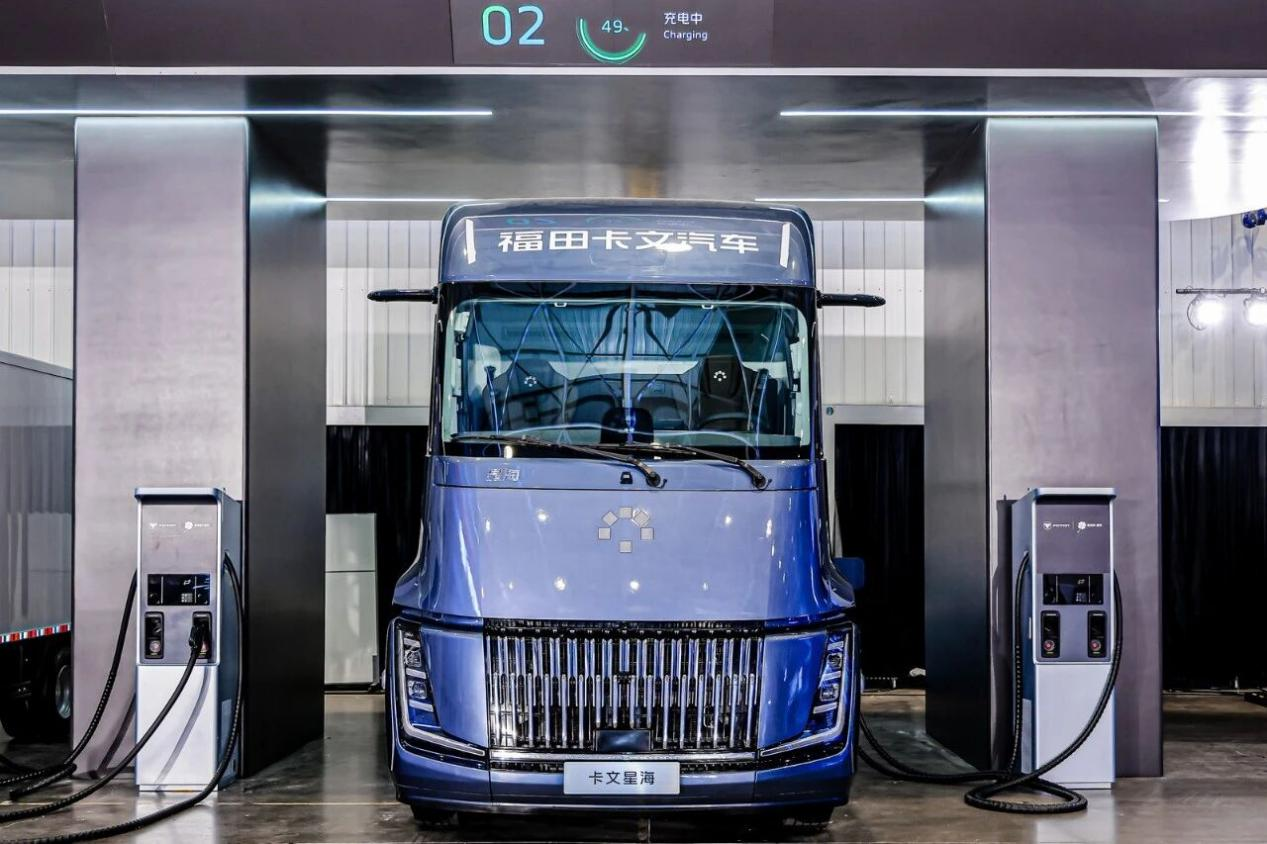
The Aumark Z, launched by Ma Lu, President of BAIC FOTON Auhawk & Aumark Business Unit, is the world's first super-fast-charging light truck built on a native pure-electric dedicated platform. The model achieves a peak charging rate of 8C and peak charging power of 1.05MW. Charging from 20% to 80% takes only 8 minutes, shortening charging waiting time for high-frequency urban distribution and intercity transport.

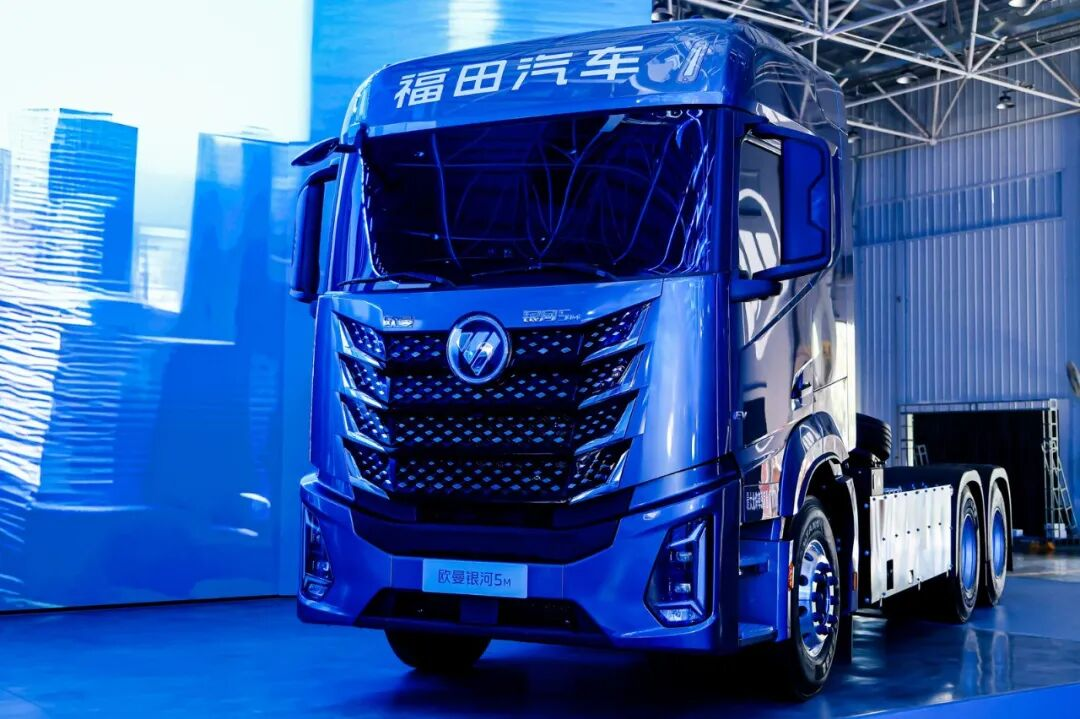
Chen Peng, Vice President of R&D of Foton Auman, then released the megawatt-level super-fast-charging heavy truck. The products cover two major series, GALAXUS and CAVAN BEACON, and are suitable for scenarios such as express delivery, cold-chain transport, port operations and bulk material transport. Six minutes of charging can meet a 100-kilometer range requirement, improving charging efficiency for high-frequency transport.
Industry Chain Collaboration to Build a Global Charging Network
Extending from vehicle charging to energy management, BAIC FOTON uses data-driven approaches to build intelligent super-fast-charging stations integrating solar power, energy storage and charging. The stations adopt 10kV AC input and 1000V DC output, integrate photovoltaics, energy storage, vehicles and loads, and upgrade stations into microgrid units with power generation, energy storage and scheduling capabilities.
At the ecosystem cooperation level, BAIC FOTON initiated the super charging industry alliance, joining forces with partners such as CATL, SUNWODA, TELD and Hunan Jingneng New Energy Technology Co., Ltd. to carry out full-chain cooperation focusing on equipment R&D, joint technology creation, station construction and energy operations, with plans to implement 5,000 standardized super-fast-charging comprehensive stations.
Relying on its business network covering more than 140 countries and regions worldwide, BAIC FOTON will promote the coordinated expansion of new energy vehicles and the charging ecosystem in global markets, with key deployment in Asia-Pacific, Latin America, Africa and Europe, and plans to achieve overseas charging ecosystem installations of more than 3,000 units by 2027.

Facing the global trend of new energy commercial vehicle transformation, BAIC FOTON will work with industry chain partners, leverage the coordinated advantages of complete vehicles, batteries and the energy ecosystem, accelerate its expansion from vehicle manufacturing to a comprehensive energy ecosystem, help the global logistics industry improve operating efficiency and reduce logistics costs, and promote the green and low-carbon transformation of commercial vehicles.