


Pickup powertrain forms continue to upgrade. New energyization must not only improve energy efficiency but also retain multi-purpose performance. Facing Africa’s diverse production operations, cross-regional transport, and daily travel scenarios, new energy technologies need to adapt to the actual operating conditions of different markets in order to fully realize their application value.
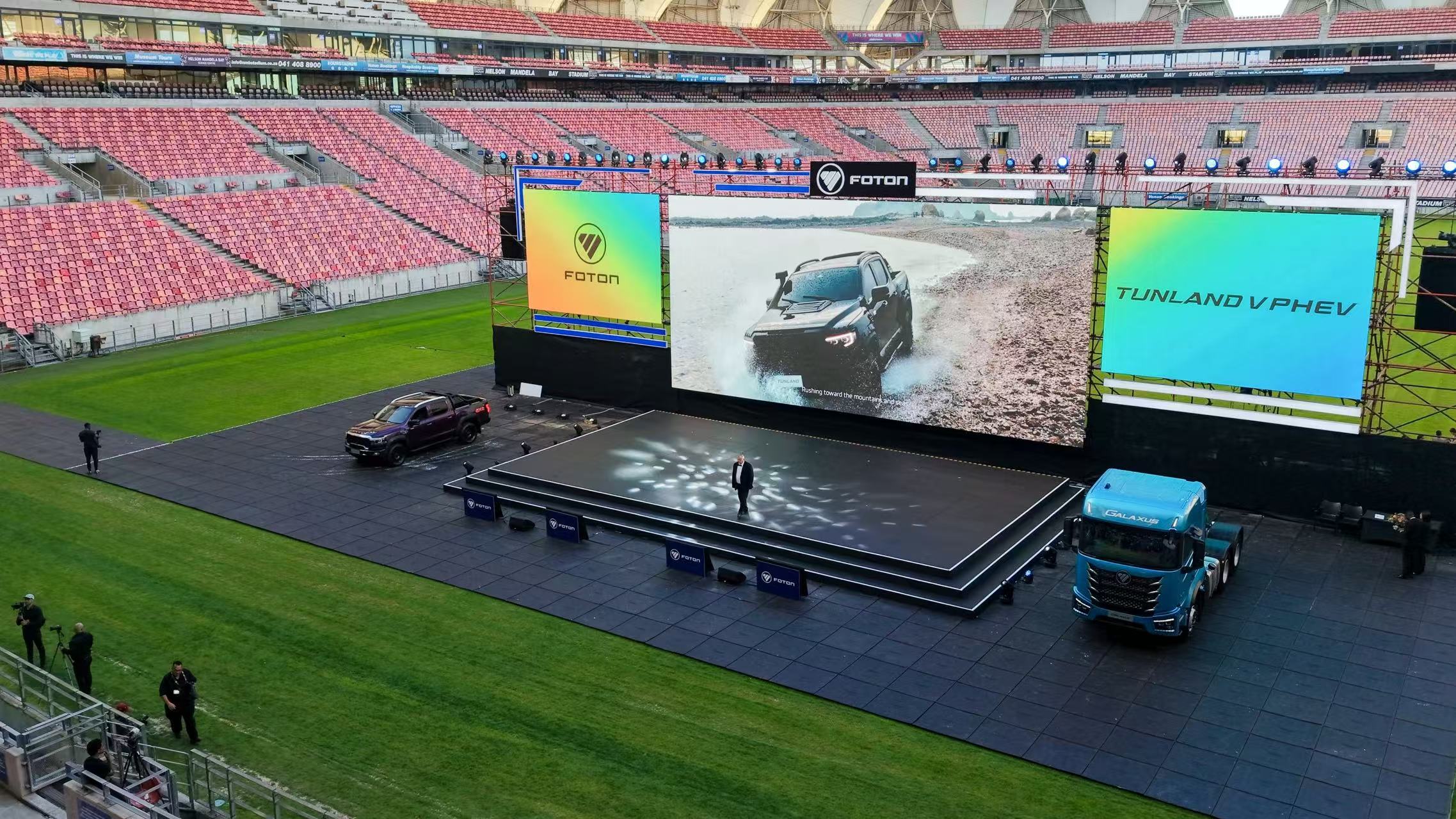
On October 29, at the Africa Partner Conference held by BAIC FOTON in Port Elizabeth, South Africa, BAIC FOTON officially launched the TUNLAND V PHEV for Africa. Following its debut in Hanover in September, this plug-in hybrid pickup, with comprehensive advantages of low consumption, long range, and hardcore performance, further expands the application space for new energy pickups in Africa’s production and mobility fields.
Multi-Speed Hybrid Balances Power and Energy Consumption to Meet Diverse Operating Needs in Africa
The TUNLAND V PHEV adopts a P1+P2+MLOCK Hyper four-wheel-drive hybrid architecture, equipped with a 2.0T hybrid-dedicated engine and a four-speed DHT transmission, with a system combined power of 350 kW and maximum torque of 800 N·m. The four-speed DHT coordinates the engine, P1 generator, and P2 drive motor to optimize power output according to operating conditions. It leverages the efficiency advantages of electric drive during daily driving and provides ample power during climbing and high-load operations.

This powertrain helps control daily energy expenses while ensuring working capability under high-load conditions, enhancing the comprehensive operational value of multi-purpose pickups in the African market.
Thousand-Kilometer Range Alleviates Charging Constraints and Supports Cross-Regional Travel
Taking the South African market as an example, public charging facility coverage varies by region. For users who frequently travel between cities, towns, and remote areas, long-distance driving requires both sufficient range and flexible energy replenishment methods.
The TUNLAND V PHEV has an 87 km pure electric range, a WLTP combined range of up to 1,000 km with a full tank and full charge, and supports 32 kW DC fast charging, charging from 30% to 80% in only 30 minutes. When charging conditions are available, short-distance travel can rely more on pure electric drive to reduce fuel consumption; for long-distance travel, the hybrid system provides continuous range and reduces dependence on public charging facilities along the route.
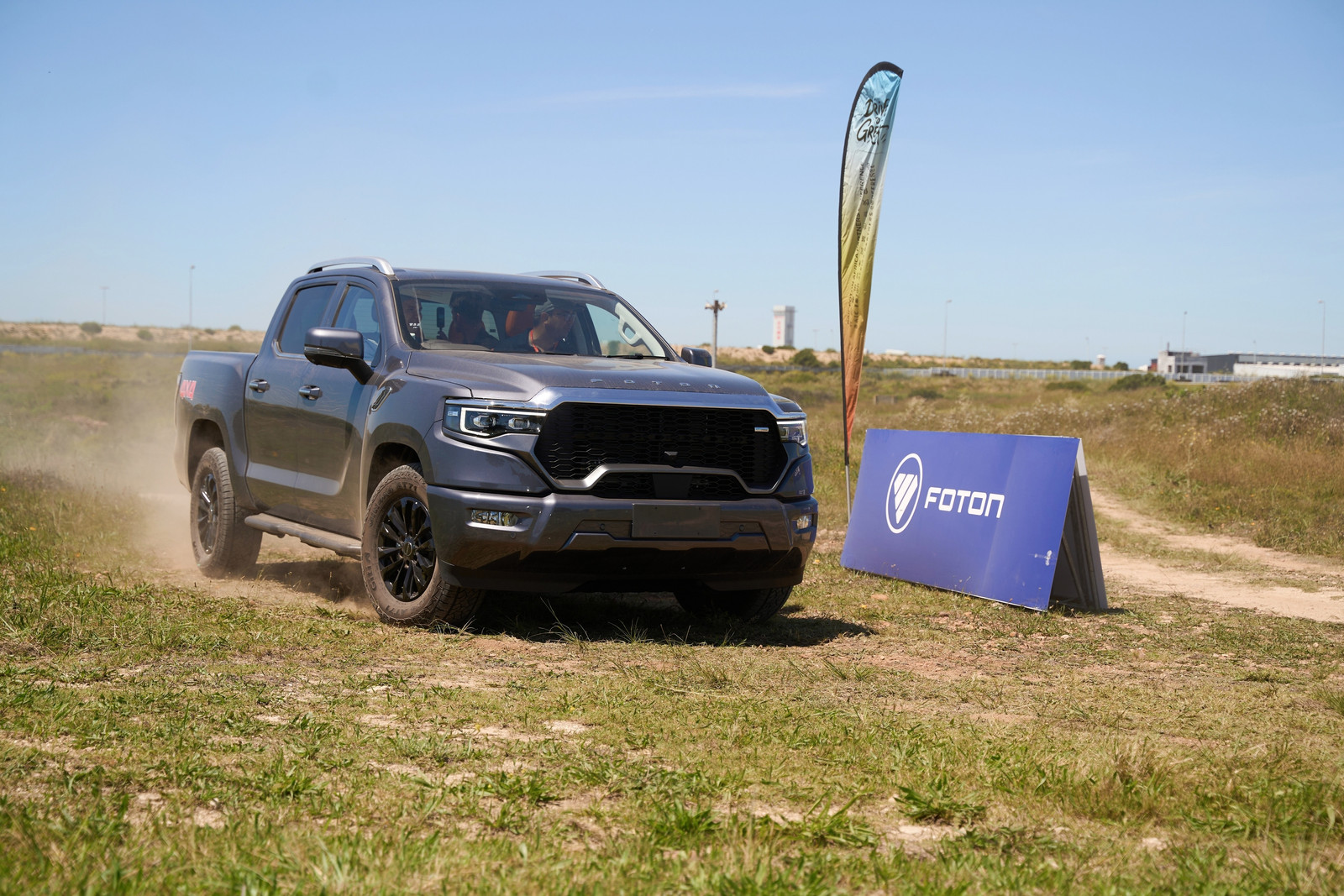
This energy solution, which balances short- and long-distance use, reduces the vehicle’s dependence on a single energy replenishment method and provides more flexible transport capacity support for new energy pickups to adapt to cross-regional transport and production operations in Africa.
Enhanced Four-Wheel-Drive Passability and Battery Protection Support Complex Scenario Operations
Farm roads, unpaved roads, and outdoor environments place higher demands on pickups’ towing, passability, and protection capabilities. Plug-in hybrid models also need to ensure the safety protection of power batteries in complex environments.
The TUNLAND V PHEV has a maximum towing capacity of 3.5 tons and 250 mm ground clearance. The MLOCK mechanical locking structure, together with front and rear electronically controlled differential locks, strengthens four-wheel-drive power transmission and escape capability on complex roads. At the same time, the power battery adopts a 360° protection design and reaches IP68 dust and water resistance, strengthening the environmental adaptability of the new energy powertrain.
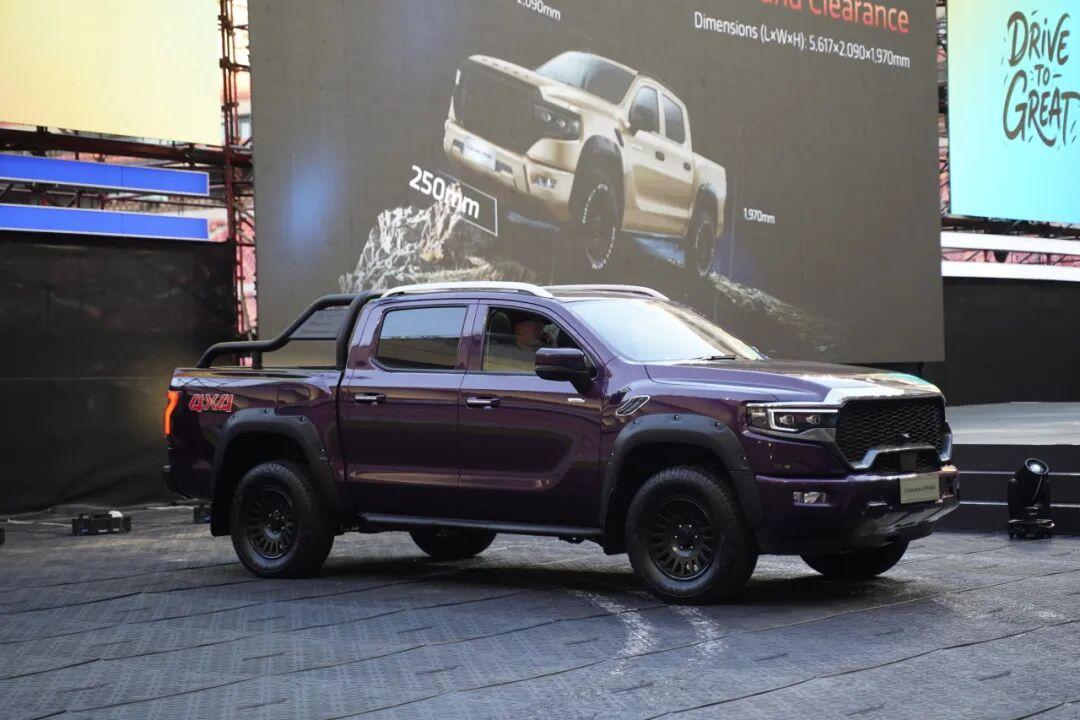
In addition, the vehicle supports 220V/6kW AC external discharge, providing power support for outdoor tools and temporary operations. The combination of four-wheel-drive passability and mobile power supply capability further strengthens the vehicle’s comprehensive operational capability in complex environments.
The launch of the TUNLAND V PHEV in Africa further enriches BAIC FOTON’s regional new energy product lineup. Relying on its African market foundation, BAIC FOTON will continue to promote coordination among new energy products, local channels, and service systems, and deepen the long-term practice of its comprehensive internationalization and comprehensive new energyization strategies in the African market.